At its core, prophylaxis in chess is simply stopping your opponent’s plans before they even happen. Instead of focusing entirely on what you want to do, you pause and ask yourself: "If it were my opponent's turn right now, what would they want to play?" Once you figure out their idea, you play a move that quietly neutralizes it.
Most beginner and intermediate players play proactive chess - they only look at their own pieces and attack. Prophylaxis requires patient, empathetic thinking. You have to temporarily step into your opponent's shoes, see the board through their eyes, and ruin their happiness.
How It Works in Real Games
Creating a "Luft" (Breathing Room): You notice your opponent might set up a back-rank checkmate in five moves. Instead of rushing your own attack, you push a pawn to
h3org3so your king has an escape square. You just killed their dream before it started.Denying Outposts: You see an enemy knight eyeing a sweet square like
d5. You playc3to cover that square. The knight is now stuck with nowhere exciting to go.Over-Defending Key Spots: You reinforce a pawn or square that isn’t even under attack yet, simply because you know your opponent is going to target it soon.
For beginner player, a prophylactic move is often nothing more than basic defense, a move made to avoid getting checkmated on the next turn or dropping a queen for free.
Can you figure it out why Qf6 was a huge mistakes?
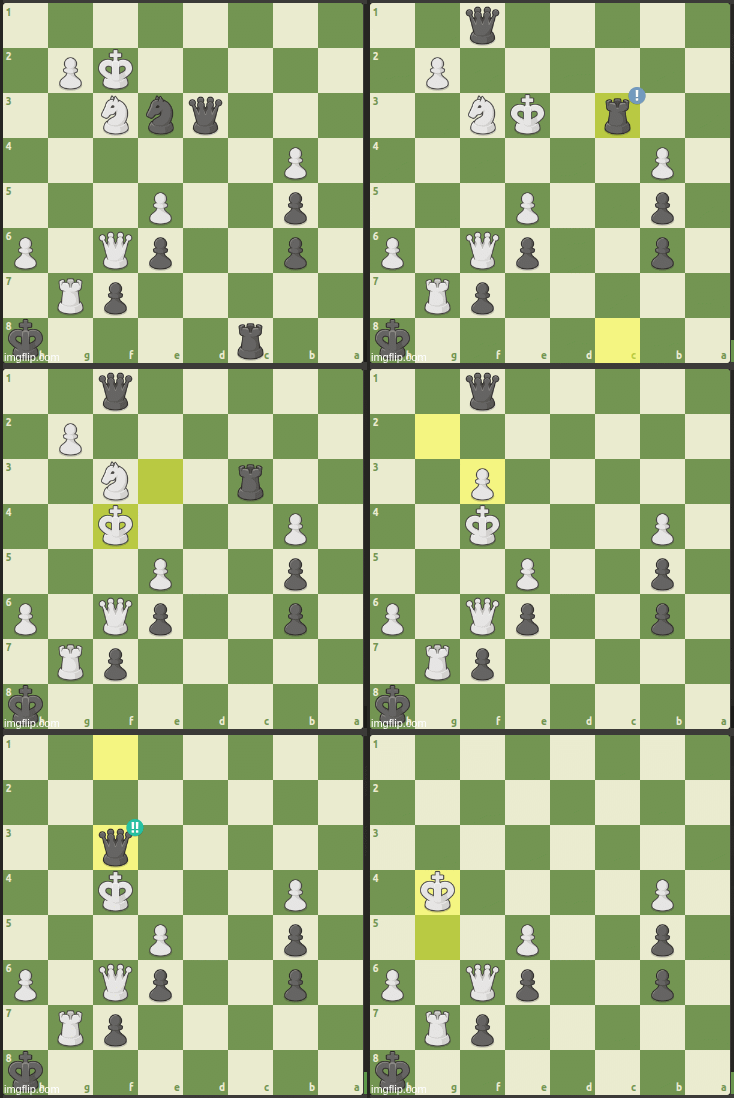
However, for more experienced players, prophylaxis is a much more sophisticated concept. This game between Nils Grandelius and Panteala Harikrishna
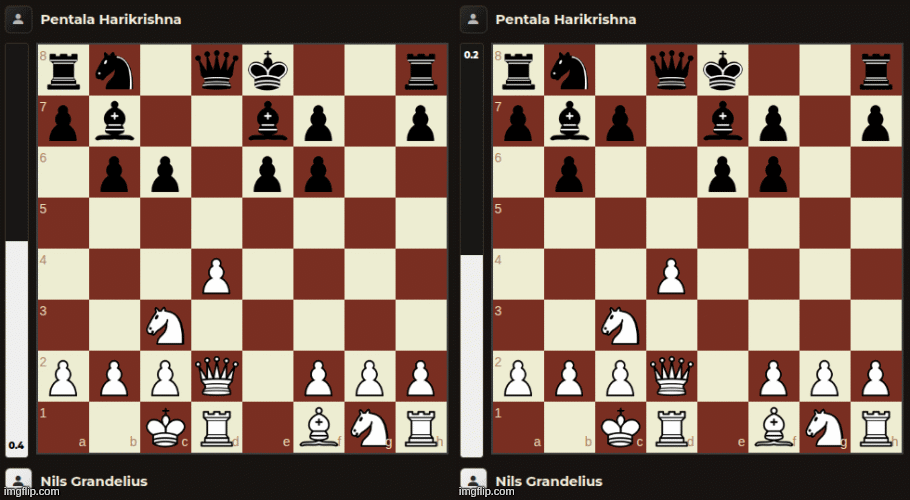
Even pawns can help to make the chess board a safer place. Pantela played his 9th move c6!
Now the d4-d5 break is impossible and Black gets time to develop smoothly, intending to play Qc7, Kd7 and 0-0-0
#Chess #ChessGame #Grandmaster #ChessPlayer #ChessLife #ChessPawn #ChessLover #BoardGames #MindGames #StrategyGames

Comments
0